As the appetite grows for devices based on transparent conductive film, cheaper and more flexible formulations have to be found. CLEARSILVER pioneered a nanosilver and nano zinc-oxide printing process suited to organic photovoltaic and organic light-emitting diode applications.
CLEARSILVER SME Instrument H2020 project – coordinated by GenesInk has ended with success on February 2019. CLEARSILVER pioneered a nanosilver and nano zinc-oxide printing process suited to organic photovoltaic and organic light-emitting diode applications.
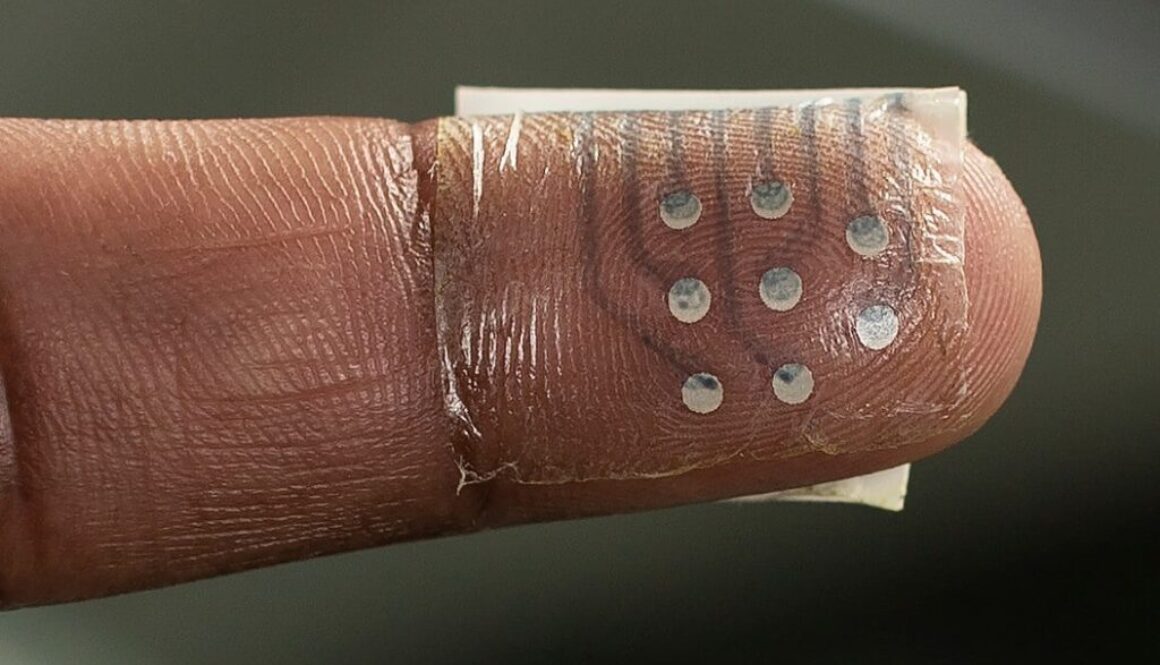
Dr Anusha Withana from Sydney University has developed an « electronic skin », meaning a super-thin, hyper-flexible sticky tape that can have electronic circuits printed onto it. Once applied, people could use it to control devices, receive information and importantly, register sensations through mobile phone-like vibrations.
This opens doors to many applications : someone with a robotic hand will be able to sense heat from a cup, or gauge how much pressure to apply to an object. A stroke patient might have a personalized interface with sensors that measure their progress and give them feedback. A surgeon doing surgery remotely could get the same sense of pressure or dexterity that they would have if they were there in person.
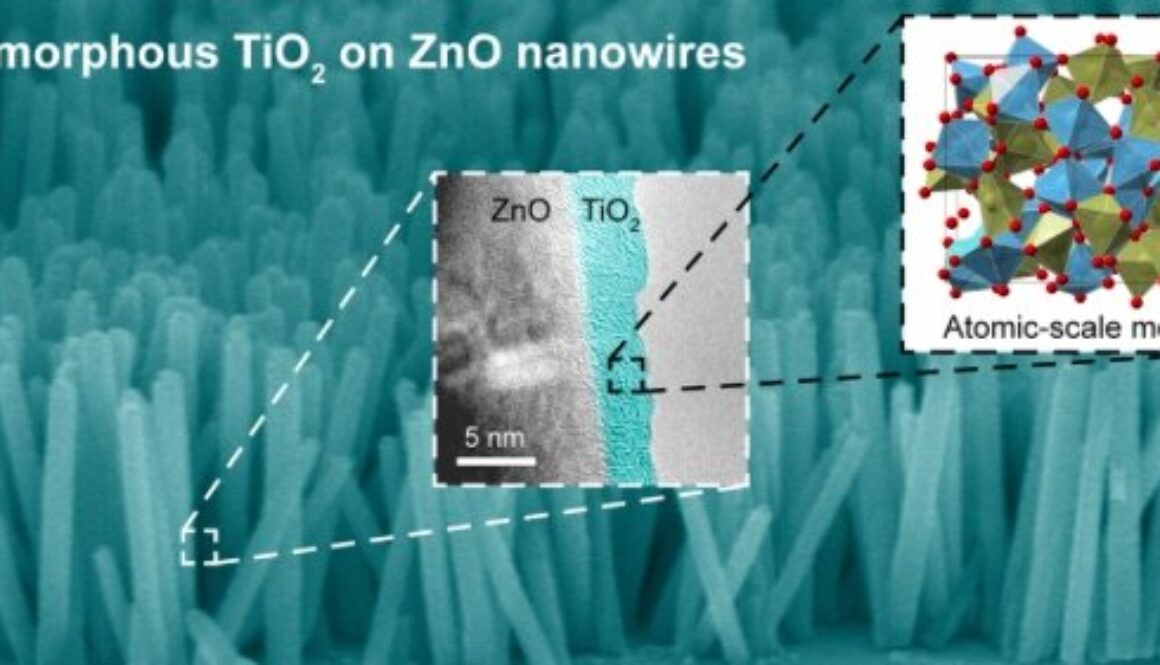
Scientists from the Center for Functional Nanomaterials (CFN) – a U.S. Department of Energy (DOE) Office – have come up with a technique for optimizing the activity 500-nanometer-long but relatively thin (40 to 50 nanometers) nanowires, made of zinc oxide (ZnO).
Those nano wires could be used as catalyst for triggering surface electrochemical reactions to generate clean and sustainable fuels such as hydrogen.
In a recent study on materials science and nanomedicine, Young-Geun Park and co-workers at the departments of Nanoscience, Nanomedicine and Materials Science and Engineering in the Republic of Korea developed an unconventional 3-D printing approach. The scientists engineered a high-resolution, reconfigurable 3-D printing strategy using liquid metals to form stretchable, 3-D constructs. Using the technique, they formed a minimum line width of 1.9 µm using direct printing and printed patterns for reconfiguration in to diverse 3-D structures while maintaining pristine resolutions.
OLED Diplays are being integrated into a motorcycle jacket. This improved visibility increases driver safety. The use of the roll-to-roll process for OLED production promises a considerable reduction in production costs. This work is done in the frame of the EU-funded PI-SCALE project which is focusing on various applications of OLEDs, including their integration into textile designs.
The technology involves « fabricating the OLEDs on flexible substrates such as plastic films and connecting them to conductive threading for their supply of electrical power. » Quoted in the press release, Claudia Keibler-Willner, head of department at the Fraunhofer FEP, summarises the outcome: « We have taken a major step forward in economical fabrication processes for OLEDs. The results are impressive: the OLED shines very uniformly. » She adds: « The use of the roll-to-roll process also promises considerable cost reductions for future components. By combining printed and vaporized layers, process throughput and production speed can be increased up to 100 times. »
In recent years, several wearable biosensors for health monitoring have entered our daily lives and captured the attention of scientific and industry communities. Wearable biosensors are significantly attractive thanks to their aptitudes of real-time monitoring of health status.
Sensor patches are implanted onto the human skins with high added value components such as signal conditioning circuits, NFC (antenna) system for data communication, an energy storage system, a display, etc. Wearable sensors are designed for controlling skin fluids such as glucose, lactate, pH, cholesterol, etc., but also pulse rate, temperature, breath rate, respiration, alcohol, activity monitoring, etc. Thus, these biosensors find their applications both in health monitoring and fitness monitoring.
The rapid developments in solution-based nanomaterials processable by printing techniques (inkjet, screen printing, flexography, etc.) offered a promising perspective to the field of wearable sensors by enabling their cost-efficient manufacturing through printing on a wide range of flexible polymeric substrates. Nowadays, GenesInk offers to the market conductive and semi-conductive nanoinks adapted for biosensors applications: i.e., SmartInk, HeliosInk and Tranductive® ranges for antennas, connectivities and displays.
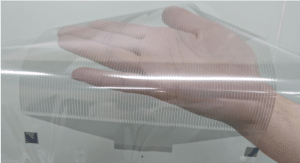
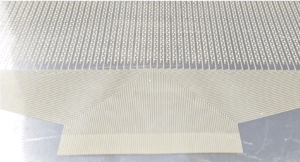
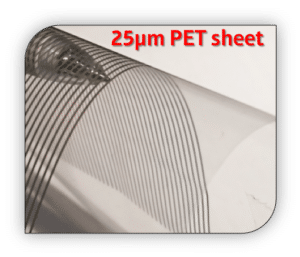
Printing electronics on 25µm thin film is now a reality making 35µm thick FPCB possible.
Printing conductive lines on thin film has always been a problem: substrate wrinkling, poor adhesion on untreated PET, impossibility to print multilayer circuits. These issues have prevented many developments in thin film devices.
Mr. Sano, from SP Solutions in Japan has been working in screen-printed electronics over the past 30 years. He is considered as the expert for screen-printed electronics in Asia. He found a solution to those issues and was able to print successfully several designs on 25µm films.
All current silver paste and ink contains curable binders. During the curing phrase the binders (organic components) shrink and retract the silver ink creating waves on the surface of the film. It results in poor film planarity, poor silver adhesion and reduced conductivity.
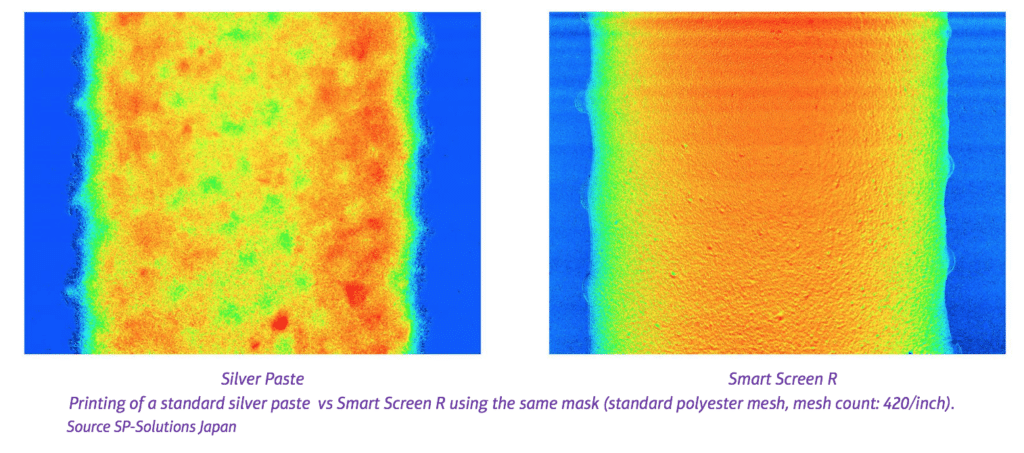
In order to avoid these issues, Mr. Sano printed GenesInk’s Smart Screen Inks on 25µm PET sheet from Ootsuki Kougyon (adhesion surface treatment). The results showed excellent adhesion (5B), no wrinkle and superior conductivity (12X vs silver paste).
Smart Screen Inks are based on nano-sized silver particle and do not contain binders. It results in much thinner print, improved line density, no shrinkage, and superior conductivity.
Resistivity of GenesInk print sample was reduced by a factor 12 versus silver flake paste.
GenesInk inks which do not contain any curable binders are “shrinkage-free” inks. This is an important features for printing on thin PET substrates (below 50µm thick).
Therefore it is possible to print conductive patterns at the surface of 25μm thick PET sheets without any troublesome wrinkles or warping which are usually observed with standard silver pastes printed on such thin flexible substrates. If low shrinkage materials (optimized for the manufacture of flexible circuits) are used as dielectric, then it becomes possible to make 35μm thick circuits boards (ink 1µm, dielectric 9µm, PET substrate 25µm).
Printed PET films were carried out at Mino group in Japan, and consisted in printing of Smart Screen R and a standard silver paste with the same mask: standard polyester mesh, mesh count: 420/inch; line pattern width = 500µm, length = 10cm.
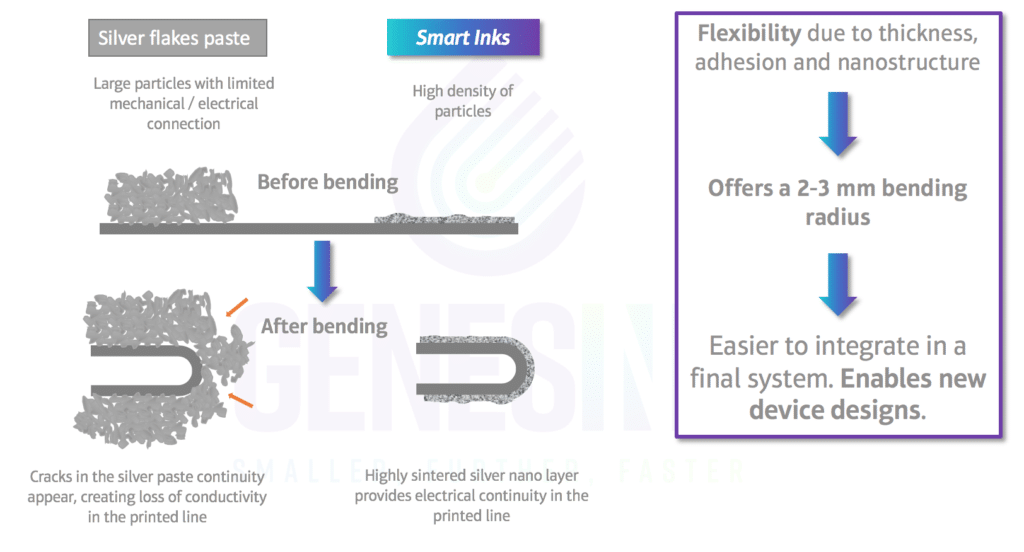
On top of the printing possibilities offered by GenesInk Smart Inks is their ability to be bent at very small radius down to 2 – 3 mm, enabling designers to create devices in space with more constraints.
Despite more than 200 years of development of batteries, the physical limits of battery performance are far from being reached. The complexity of physico-chemical processes inside batteries makes any development strongly dependent on a proper description and monitoring of the inherent evolution and interaction of all materials involved in the functioning of an electrochemical cell. The mean figures of merit (specific energy per mass, volume or cost unit, cyclability) can all theoretically be substantially improved, under the condition of a proper understanding of where and how their limits are reached in today’s industrialized systems. This underlines how much this important branch of our technological future depends on novel and accessible characterization techniques. Given this grand challenge, access to advanced characterisation solutions for the EU industry will be key to accelerate innovation and reduce the large cost share of materials. However, several bottlenecks are preventing access by companies to novel techniques, to which TEESMAT – by launching an Open Innovation Test Bed (OITB) – brings a comprehensive response by leveraging European strengths from 11 Countries and facilitating access to physical facilities, capabilities and services implementing novel characterisation solutions with outstanding capability and performance.
Objectives:
The overall aim of TEESMAT is to lower the barriers of access to industrially relevant, novel problem-solving techniques and services, including characterisation and data analytics for large and small companies. This aim will be pursued by setting up & implementing a financially sustainable Open Innovation Test Bed (OITB) whose techniques and services address such diverse problems faced in the development of clean, safe, high-performance battery solution. The three core objectives of TEESMAT are:
Set-up an OITB to provide effective, centrally managed access to advanced materials’ characterisation, modelling and data informatics;
Demonstrate the OITB’s added value by solving persistent, high-impact industrial problems;
Ensure the OITB’s growth, longevity, financial sustainability and stakeholder support.
Consortium
The TEESMAT consortium gathers 9 Service Providers (SEMILAB, INCORE, CERTH, CEA, ZSW, VITO, ESRF, TECNALIA, SERMA) developing services with the active contribution of 10 Services Users (ZINERGY, LITHOPS, YUNASKO, GENES’INK, SUNLIGHT, NORTHVOLT, ARKEMA, UMICORE, CEGASA and CRF-FIAT) sharing materials characterisation experience in the frame of 24 User Access Cases. TEESMAT is managed and coordinated by CEA and WAVESTONE. EBN is taking in charge communication and dissemination tasks and activities. A total of 14 small and large enterprises from 10 Countries contribute on both sides of the service (offer and demand) along the full value chain. The consortium is offering a complete set of interdisciplinary skills extremely interconnected and transverse for the project.
During project lifetime, the consortium aims at attracting additional EU Services Users and Providers in order to widen the OITB experience and prepare its continuity beyond TEESMAT.
GenesInk role and expectations
GenesInk participates to TEESMAT as a service user. In the framework of TEESMAT, GenesInk is seeking for solutions and answers related to “All printed batteries user case”.
Indeed, GenesInk is developing 2 solutions for Cu metallisation of polymer flexible substrates – electroless metallisation and Cu nanoinks. Cu will be integrated as current collector into printed flexible batteries. Cu is subject to oxidation during processing (deposition and curing). Besides, storage of Cu is a tough task due to oxidation and nanoparticles (NPs) aggregation. Tools are required to follow copper oxidation in liquid phase during storage and inline during processing (deposition and curing). Furthermore, tools are needed to study the quality of the deposited Cu ink and control all defects caused by oxidation and/or contamination by battery layers (electrodes, electrolytes, etc.).
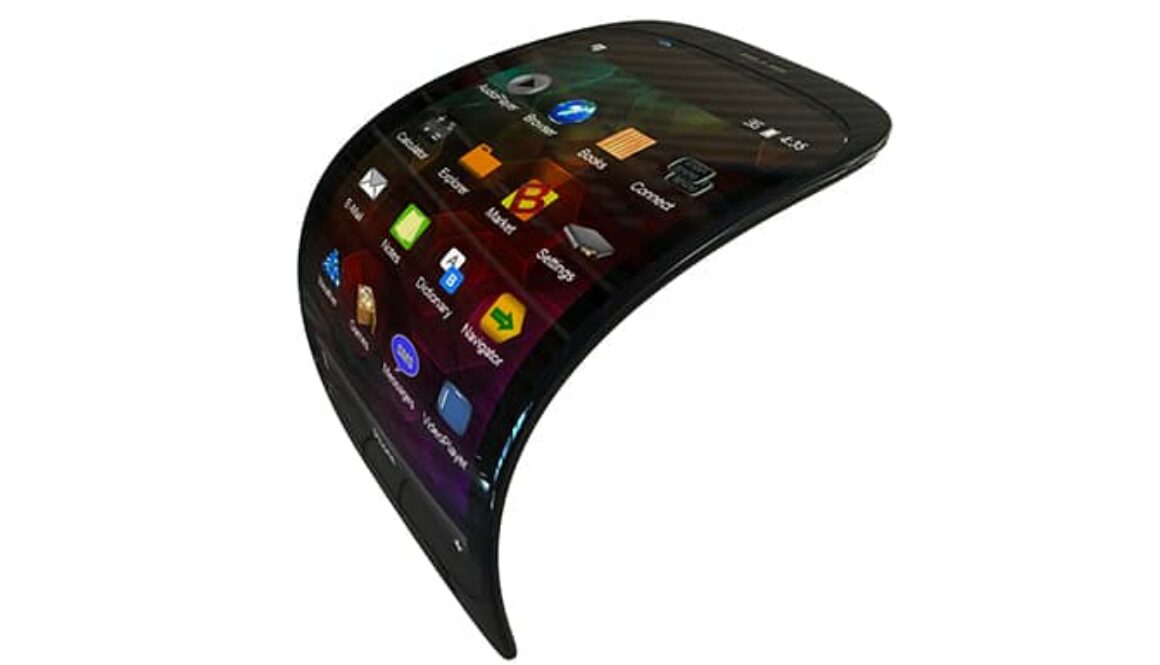
Growing demand of flexible displays in 2019, it all begun with foldable phones, then TV rollup and now a handbag. What does the future hold for flexible displays?
Flexible displays shook the market in 2019 when it all begun with smartphones, followed by roll-up TV’s and now handbags. Is this a trend of 2019? More and more companies are looking out at advanced technologies to add on their product range and Louis Vuitton is one of them.
Luxury fashion giant Louis Vuitton showed off their newly developed handbag with two flexible displays at their cruise 2020 show in New York. They call it the Canvas Display and has shown their loyalist what to expect in the coming future. This bag is a blend of Louis Vuitton’s craftmanship fusion with cutting edge advanced technologies. They have however managed to add two displays in their traditional Louis Vuitton’s iconic bag designs.
PiXDRO (a Meyer Burger company) recommend GenesInk Smart Jet inks for their inkjet printing equipment.
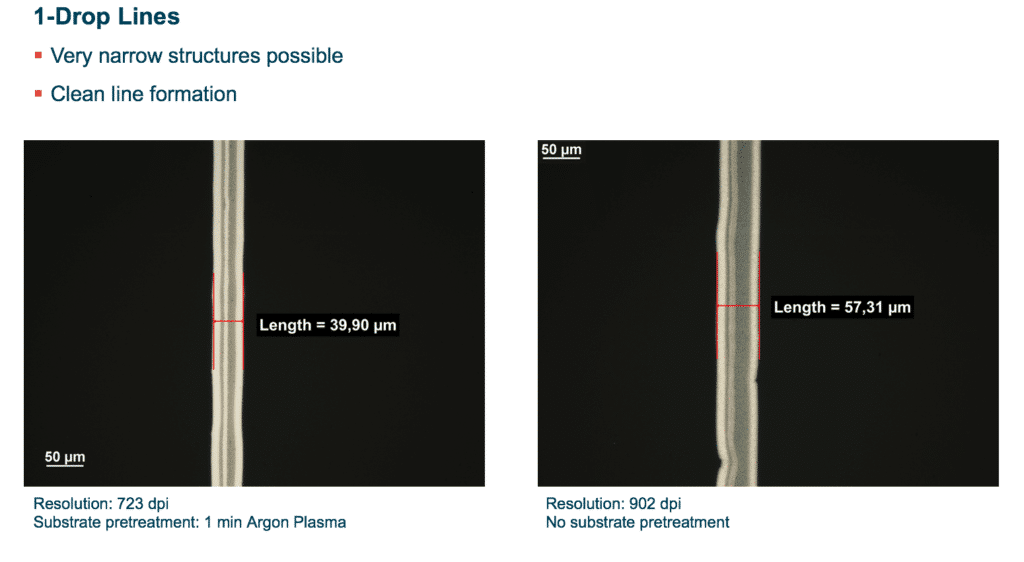
GenesInk Smart jet inks show excellent results on treated and non treated substrates as showed in the InnovationLab test below.
The PiXDRO JETx production platform is designed for high productivity and reliability, low cost of ownership, and integration in highly automated mass production environments. The LP50 R&D printer excels in flexibility and process control, offering fast product development and time-to-market.
GenesInk Smart Jet inks are designed to fit PiXDRO inkjet compatible print head from Dimatix, XAAR and Konica Minolta.
Pour offrir les meilleures expériences, nous utilisons des technologies telles que les cookies pour stocker et/ou accéder aux informations des appareils. Le fait de consentir à ces technologies nous permettra de traiter des données telles que le comportement de navigation ou les ID uniques sur ce site. Le fait de ne pas consentir ou de retirer son consentement peut avoir un effet négatif sur certaines caractéristiques et fonctions.
Fonctionnel
Toujours activé
L’accès ou le stockage technique est strictement nécessaire dans la finalité d’intérêt légitime de permettre l’utilisation d’un service spécifique explicitement demandé par l’abonné ou l’utilisateur, ou dans le seul but d’effectuer la transmission d’une communication sur un réseau de communications électroniques.
Préférences
L’accès ou le stockage technique est nécessaire dans la finalité d’intérêt légitime de stocker des préférences qui ne sont pas demandées par l’abonné ou l’internaute.
Statistiques
Le stockage ou l’accès technique qui est utilisé exclusivement à des fins statistiques.Le stockage ou l’accès technique qui est utilisé exclusivement dans des finalités statistiques anonymes. En l’absence d’une assignation à comparaître, d’une conformité volontaire de la part de votre fournisseur d’accès à internet ou d’enregistrements supplémentaires provenant d’une tierce partie, les informations stockées ou extraites à cette seule fin ne peuvent généralement pas être utilisées pour vous identifier.
Marketing
L’accès ou le stockage technique est nécessaire pour créer des profils d’internautes afin d’envoyer des publicités, ou pour suivre l’utilisateur sur un site web ou sur plusieurs sites web ayant des finalités marketing similaires.




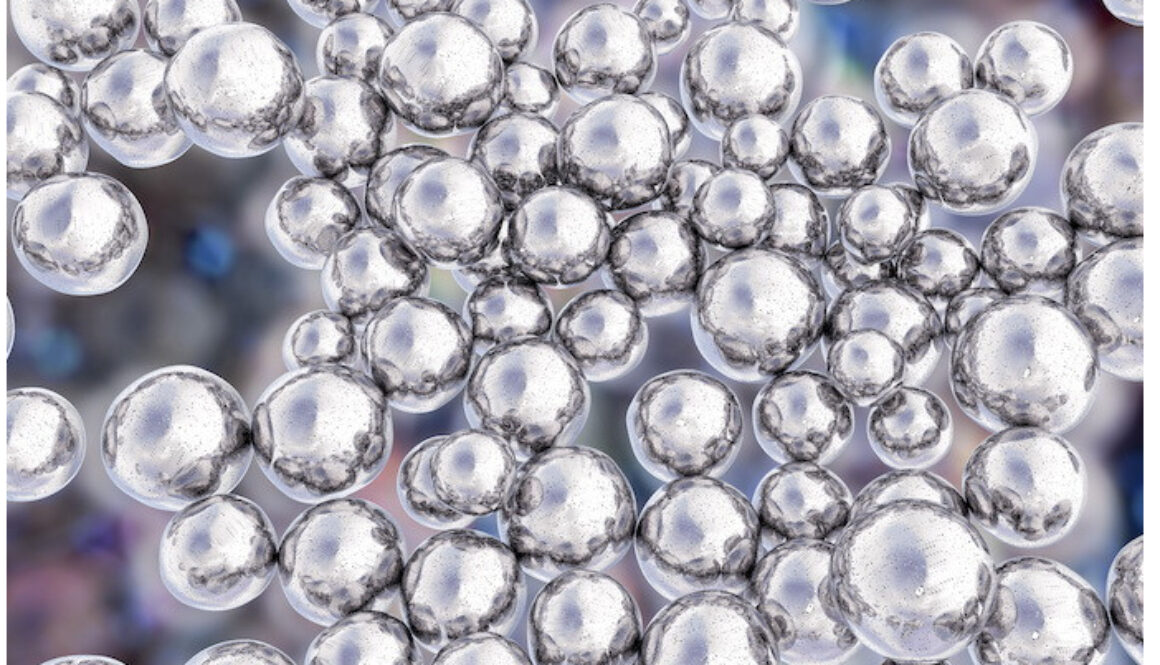


 All current silver paste and ink contains curable binders. During the curing phrase the binders (organic components) shrink and retract the silver ink creating waves on the surface of the film. It results in poor film planarity, poor silver adhesion and reduced conductivity.